
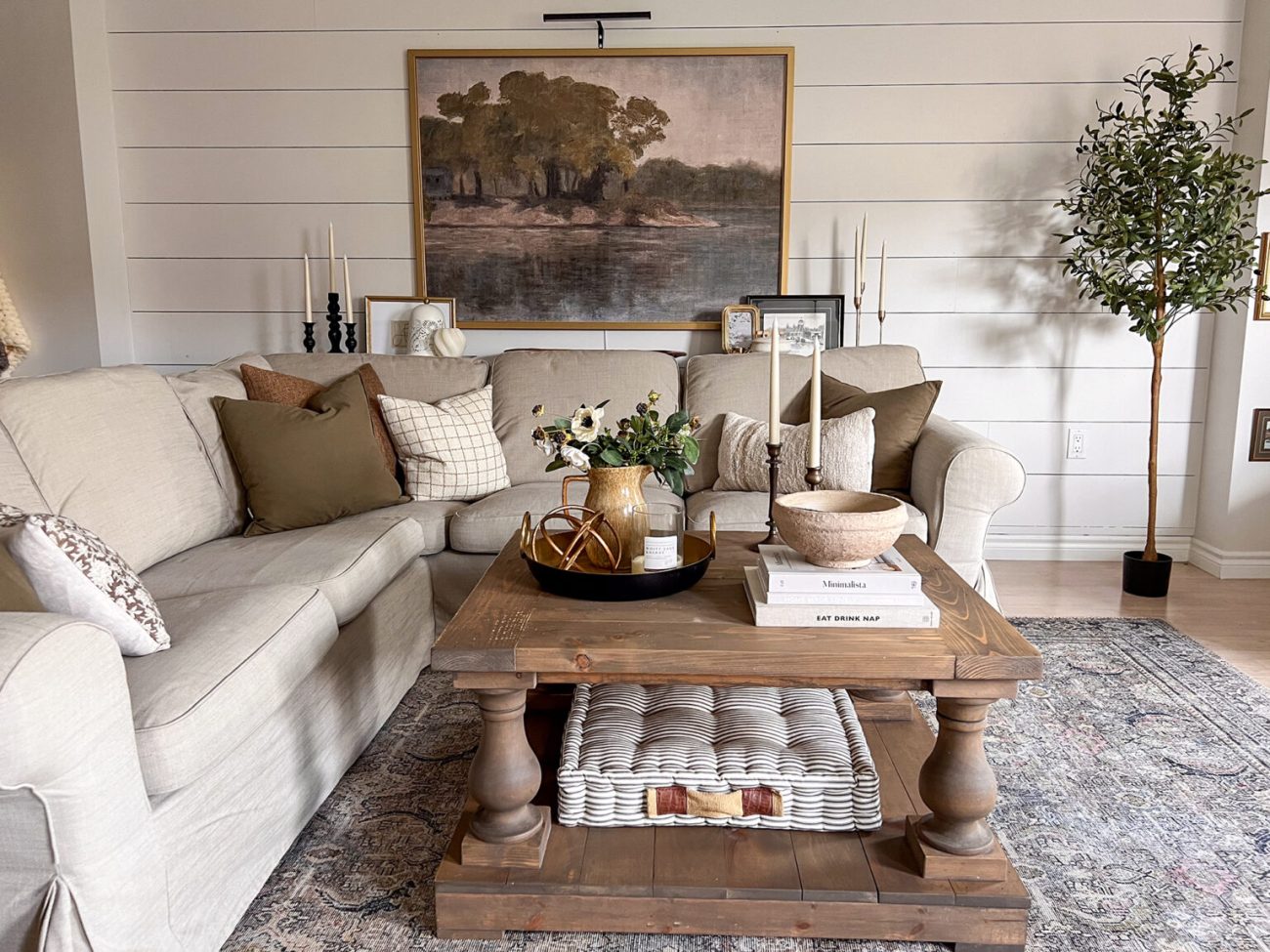
A coffee table should look considered without becoming unusable. The most practical styling leaves room for a drink, a laptop, snacks, a game, or feet that inevitably appear during relaxed evenings.
Instead of covering the entire tabletop, treat decoration as one controlled zone and preserve the rest for everyday life.
Create One Main Styling Zone
Grouping decor in one area is easier to live with than spreading individual pieces across the whole table. A tray, stack of books, or low bowl can create that main zone.
This keeps the arrangement visually intentional while preserving an obvious open section.
Exploring different living room ideas can help you compare how decoration changes depending on table size, seating layout, and the amount of open surface available.
Combine Different Heights Without Blocking Views
Coffee table decor looks more natural when objects vary in height, but tall accessories can interfere with conversation or television sightlines.
A low stack of books, medium candle, and modest vase often provides enough variation.
Looking at room styling resources can provide visual references, but the arrangement should still respond to how your household actually uses the seating area.
| Item | Styling Role | Practical Limit |
|---|---|---|
| Books | Adds layers | Keep stack low |
| Tray | Groups small items | Don’t oversize it |
| Vase | Adds height | Protect sightlines |
| Bowl | Holds useful objects | Avoid loose clutter |
Choose Decor That Can Move Easily
Coffee tables often need to change roles quickly. A decorative arrangement may need to move for dinner, homework, board games, or visitors.
Keeping most accessories on one tray makes this simple. Lift the tray and the table becomes usable almost immediately.
Broader everyday decor inspiration can also be adapted by asking one practical question: can the arrangement be moved without dismantling the entire display?
Give Frequently Used Items a Place
Remotes and coasters don’t need to be hidden completely. A small box, bowl, or tray compartment can keep them accessible without leaving them scattered.
Style Around the Shape of the Table
Round tables usually look better when decor follows their central shape rather than being pushed into sharp corners. Rectangular tables offer more flexibility because one end can remain decorated while the opposite end stays open.
On large square tables, dividing the surface mentally into four sections can help. Style only one or two zones rather than filling every quadrant.
Small tables require even more restraint. One attractive bowl and a short book stack may be enough.
Why Over-Styling Usually Fails
A heavily styled coffee table may photograph well but become frustrating in daily life. Too many books, candles, sculptures, and flowers force people to move objects every time they want to set something down.
Another mistake is filling empty space simply because it looks unfinished. Open tabletop is not missing decoration; it is functional space.
If the room already contains strong rugs, cushions, artwork, and lighting, the coffee table may need less visual activity than expected.
Frequently Asked Questions
How much of a coffee table should remain empty?
There is no exact percentage, but enough space should remain for the activities you normally do there. If setting down two drinks requires moving decorations first, the styling is probably occupying too much surface.
What can I use instead of coffee table books?
Try a shallow bowl, decorative box, small plant, ceramic object, or tray. Choose something with enough visual presence to anchor the table without taking up excessive room.
Should a coffee table tray be centered?
Not necessarily. Placing the tray slightly off-center often leaves a larger continuous area for daily use. Centering can still work on large tables when plenty of open surface remains around it.
Let the Table Stay Useful
Good coffee table styling should support the room instead of competing with everyday habits. Create one clear decorative zone, choose items that move easily, and protect enough open space for the way the table is actually used. Resist filling gaps simply for appearance. A table that remains attractive during normal daily life is more successful than one that works only when untouched.
