
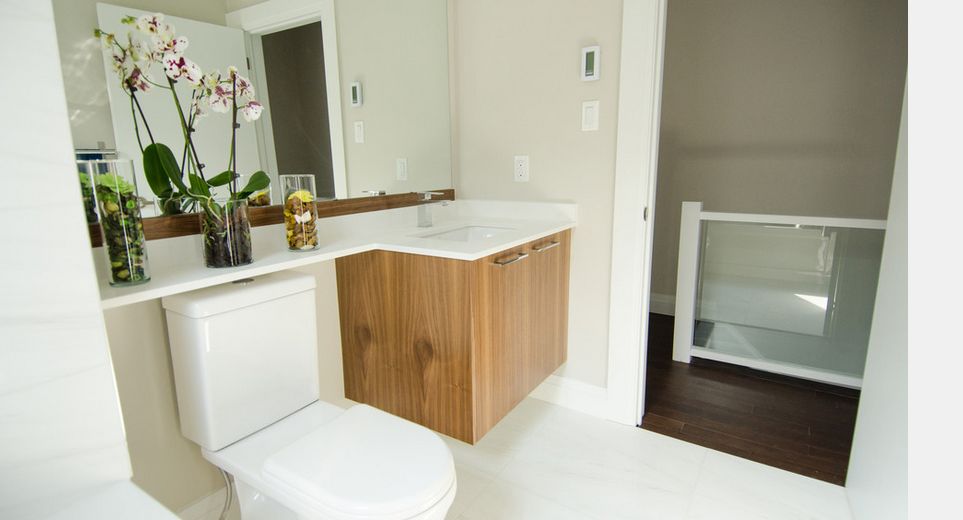
The wall above a toilet is often one of the least used areas in a bathroom. A carefully proportioned cabinet can turn that vertical space into storage for toiletries, spare paper, cleaning supplies, and extra towels while looking more like part of the room’s architecture than an afterthought.
Size the Cabinet to the Wall, Not Just the Toilet
A cabinet that exactly matches the toilet width may appear too narrow on a broad wall. On the other hand, extending cabinetry too far outward can make a compact bathroom feel boxed in.
Consider the entire wall composition, including nearby vanity edges, tile lines, windows, doors, and ceiling height. Studying different bathroom and home layouts can help identify proportions that feel intentional rather than squeezed into leftover space.
Leave comfortable clearance above the toilet tank so maintenance remains possible.
Use Built-In Details to Create a Finished Look
Small details determine whether an over-toilet cabinet appears integrated or simply mounted on the wall. Extending trim toward the ceiling, aligning cabinet edges with nearby architectural lines, or matching the vanity finish can create a stronger connection.
Painted cabinetry that matches the wall can nearly disappear. Contrasting wood offers more character but becomes a stronger visual feature.
Ideas from broader interior design references can help you decide whether the cabinet should blend quietly or function as a focal point.
| Cabinet Style | Visual Effect | Good Storage Use |
|---|---|---|
| Wall-matched doors | Quiet and integrated | Toiletries |
| Wood cabinet | Warm focal point | Towels |
| Glass-front doors | Lighter appearance | Display items |
| Open-and-closed mix | Casual and practical | Mixed storage |
Combine Closed Cabinets With Open Shelving
Completely closed storage keeps personal items hidden and usually creates the calmest appearance. However, one open shelf beneath the doors can make the unit feel less heavy.
That shelf can hold a small basket, folded hand towels, or a simple decorative object. Avoid filling it with numerous toiletries because visible product packaging can quickly make a small bathroom look busy.
Exploring different home styling concepts may help you choose accessories that complement the cabinetry without turning the shelf into a decorative display that requires constant rearranging.
Plan for Practical Bathroom Conditions
Bathrooms create moisture, cleaning demands, and frequent temperature changes, so cabinet materials should suit the environment. Surfaces that wipe clean easily are generally more practical than delicate finishes near a toilet.
Door swing needs attention too. Wide doors may collide with nearby mirrors, lights, shower screens, or walls. Two smaller doors can often provide easier access in tight rooms.
Adjustable shelves improve flexibility because toilet paper, bottles, folded towels, and grooming products all require different heights.
What Makes Over-Toilet Storage Look Awkward
The biggest problem is often scale. A tiny cabinet floating high above the toilet leaves an uncomfortable gap, while a deep oversized unit can feel as though it projects over the user.
Clutter creates another issue. Open shelving may seem visually lighter, but storing every bathroom necessity in plain view can make the entire wall feel chaotic. Conceal everyday supplies and keep only a small number of intentional items visible. Access to the toilet tank, plumbing, and shutoff areas should never be sacrificed for appearance.
Frequently Asked Questions
How high should a cabinet be above a toilet?
The cabinet should provide comfortable head clearance and allow access to the toilet tank where required. Exact placement depends on the toilet height, cabinet depth, users, wall dimensions, and surrounding fixtures.
Are cabinets better than shelves above a toilet?
Cabinets hide toiletries and create a cleaner appearance, while open shelves are easier to access and can feel lighter. Combining closed upper storage with one open shelf often provides a useful compromise.
What should be stored in an over-toilet cabinet?
Spare toilet paper, extra toiletries, hand towels, grooming supplies, and small bathroom essentials are common choices. Keep heavy or frequently dropped objects in safer, easily reached locations rather than placing them on high open shelves.
Make the Cabinet Belong to the Bathroom
Over-toilet storage looks strongest when it relates to the whole bathroom instead of filling an empty rectangle on the wall. Align it with nearby features, choose a depth that doesn’t crowd the user, and hide most visual clutter behind doors. Thoughtful proportions and simple detailing can turn an awkward unused wall into practical storage that feels planned from the beginning.
