
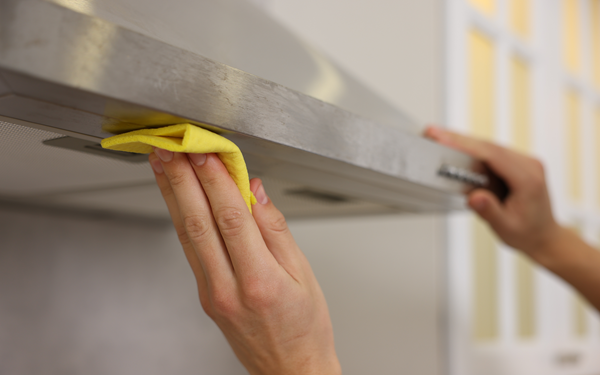
A range hood works best when air can move through clean filters and grease hasn’t accumulated across its accessible surfaces. Routine range hood maintenance includes cleaning filters, wiping grease from the hood body, checking fan performance, and inspecting the vent path when airflow seems weaker than normal.
Start With the Grease Filters
Filters collect airborne grease before it reaches other parts of the hood. As buildup increases, airflow may decline and cleaning becomes harder, so it’s better to service filters before they become heavily coated.
Kitchen maintenance can be included with broader home care inspiration so filter cleaning doesn’t depend on remembering the last time the hood looked dirty.
Identify the Filter Type
Washable metal filters and replaceable filters require different care. Check the hood manufacturer’s instructions before soaking, scrubbing, or replacing anything.
Clean Grease From Accessible Surfaces
Turn the hood off and allow cooking surfaces nearby to cool before cleaning. Use a method appropriate for the hood finish and avoid flooding switches, lighting components, or fan controls with liquid.
People organizing kitchen upkeep may combine appliance checks with other kitchen-focused reading, but the cleaning product used on the hood should still be compatible with its specific finish.
| Maintenance Area | Problem to Watch For | Useful Action |
|---|---|---|
| Grease filter | Heavy coating | Clean or replace |
| Hood surface | Sticky residue | Degrease carefully |
| Fan | Noise or weak pull | Inspect for buildup |
| Exterior vent | Poor opening | Check obstruction |
Pay Attention to Airflow and Fan Noise
Run the hood at different speeds and listen for changes. Rattling can come from loose filters or components, while a new grinding or scraping sound may need closer inspection.
If a ducted hood no longer seems to move air effectively, check accessible filters and the exterior vent termination. A folder of household improvement references can help track recurring tasks, especially if the vent outlet is in a location that’s easy to forget.
Inspect the Vent Termination
For a ducted hood, the exterior termination should allow exhaust air to leave the building without an obvious obstruction. Grease residue, debris, damaged dampers, or nesting material can interfere with movement.
Don’t assume weak airflow is always caused by the filter. Long duct runs, sharp bends, damaged ductwork, or a fan problem can also affect performance and may require a more thorough inspection.
Cleaning Mistakes That Reduce Hood Performance
Waiting until grease drips from a filter is far too late for routine maintenance. Heavy buildup is harder to remove and can spread into areas that are less accessible.
Another mistake is reinstalling a filter before it is fully dry when the filter’s cleaning instructions call for drying first. Avoid harsh abrasives on finished surfaces and don’t spray cleaner directly into electrical controls, motors, or lighting assemblies.
Frequently Asked Questions
How often should range hood filters be cleaned?
There isn’t one schedule for every kitchen. Cooking frequency, frying, oil use, filter type, and hood design all matter. Inspect the filter regularly and clean or replace it according to the manufacturer’s guidance before grease becomes excessive.
Why is my range hood fan getting louder?
Grease buildup, a loose filter, vibration, worn fan components, or an obstruction can change the sound. Clean accessible parts first and investigate persistent grinding, scraping, or unusual vibration.
Why does my range hood have weak suction?
Dirty filters are a common place to start, but restricted ductwork, a blocked exterior damper, fan problems, or an unsuitable installation can also reduce airflow. Check the complete exhaust path when basic cleaning doesn’t help.
Keep Grease From Becoming a Bigger Job
Range hood maintenance is easiest when grease is removed before it hardens across filters and surrounding surfaces. Inspect the filter regularly, clean accessible areas safely, and pay attention to changes in fan sound or airflow. If cleaning doesn’t restore normal venting, look beyond the filter and have the exhaust system checked where necessary.
